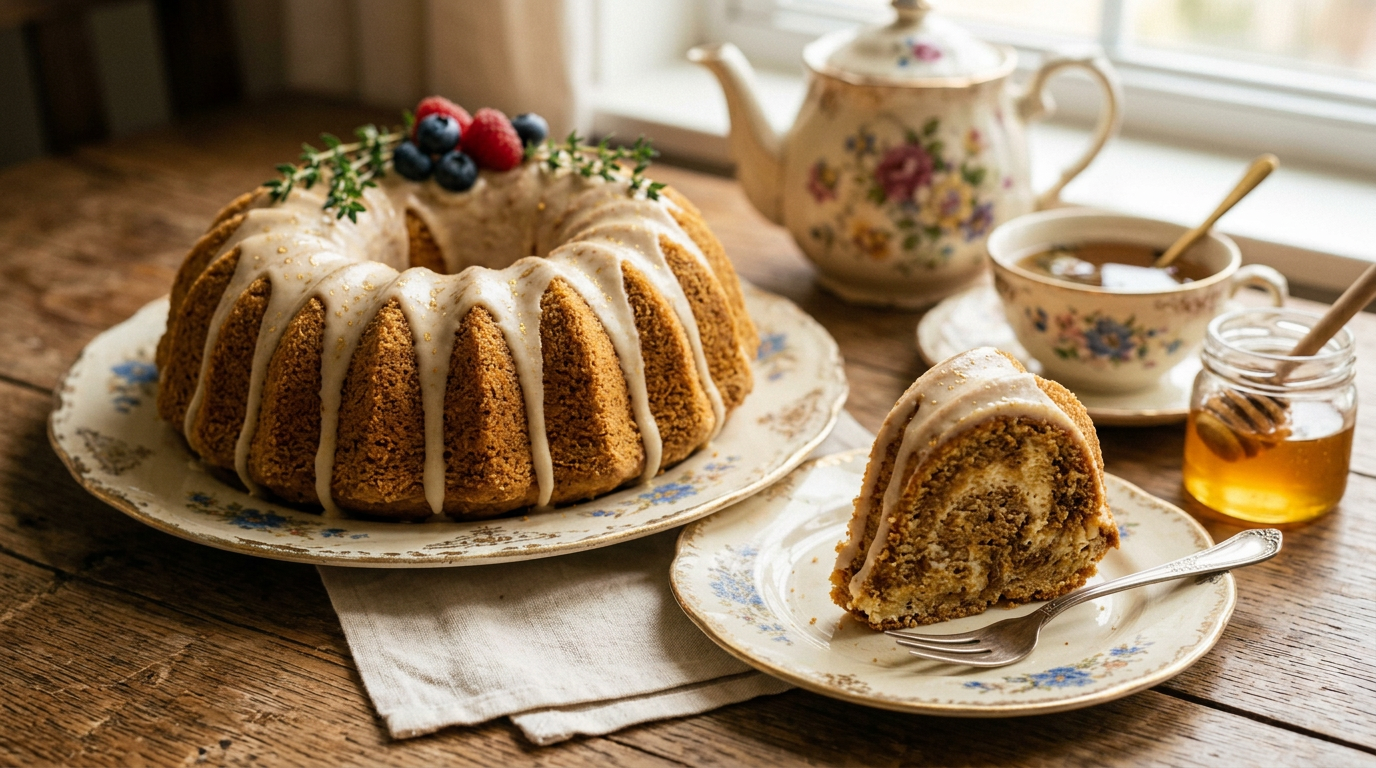
The Ultimate German-Jewish Honey Cake (Lekach)
Have you ever wondered how a simple honey cake became the ultimate symbol of a sweet new year? Long before it became a staple on modern holiday tables, this deeply spiced dessert evolved in the bustling kitchens of medieval Germany. Known historically as lekach, this traditional German-Jewish honey cake is more than just a sweet treat—it is an edible piece of history.
Unlike modern sponge cakes, a true heritage honey cake is dense, profoundly spiced, and incredibly moist. Its legendary texture comes from a brilliant historical adaptation: strong-brew coffee and a touch of citrus to balance the honey’s deep sweetness. Even better, this cake breaks the rules of baking—it actually tastes better a day or two after it is baked, making it the ultimate make-ahead dessert.
From Central Europe to the Holiday Table: The History of Lekach
While honey cake is universally loved today as a Rosh Hashanah staple, its journey to the Ashkenazi table spans centuries and continents. This recipe’s roots trace directly to Germany and Central Europe, where it evolved from ancient honey breads into the spiced, moist masterpiece we know today.
The Ancient Beginnings
The tradition of eating sweet foods for the Jewish New Year dates back to the Talmudic era and symbolizes hope for a sweet year ahead. However, the specific concept of lekach—the Yiddish word for honey cake, derived from the Hebrew word for “portion” or “buying”—gained its unique identity in medieval Germany.
During the Middle Ages, German bakers excelled at making Lebkuchen (traditional honey-spice gingerbread). Jewish home bakers adapted these local European techniques, using what was available to meet kosher dietary laws. Because honey cake contains no dairy, it quickly became the perfect parve (neutral) dessert to serve after any holiday meal.
The Magic of Spices and Coffee

In the 17th and 18th centuries, trade routes brought exotic spices like cinnamon, cloves, and allspice to Central Europe. German-Jewish bakers enthusiastically incorporated these into their holiday bakes. Spices weren’t just a luxury; they masked the strong, sometimes bitter flavor of wild honeys and helped preserve the cake.
Later, as coffee culture swept through Germany and the rest of Europe, bakers discovered a brilliant baking science hack. Replacing water with strong, warm coffee completely transformed the cake. The coffee’s acid reacted beautifully with baking soda to create a lighter lift, while its deep, roasted flavor cut through the honey’s intense sweetness.
A Cake That Teaches a Lesson
Historically, lekach wasn’t just a dessert; it carried deep community meaning. In many European towns, it was tradition for community members to ask the rabbi or elders for a slice of honey cake on the eve of Yom Kippur. This ritual practice reminded people to practice humility, acknowledging that all humans depend on the generosity of others and God for their daily “portion.”
When you bake this cake today, you are recreating a centuries-old tradition born in European kitchens—a sweet bridge connecting generations of bakers through the simple, comforting scent of honey and spice.
The Secret to Perfect Lekach
- The Coffee Factor: Don’t worry, your cake won’t taste like espresso. Warm coffee activates the baking soda and adds a rich, dark undertone that keeps the honey from tasting overly sweet.
- The Waiting Game: If you can resist, wrap the cooled cake in plastic wrap and let it sit on the counter for 24 to 48 hours before slicing. The flavors will deepen, and the texture will become beautifully fudgy.
Prep time: 15 mins | Bake time: 60 mins | Yields: 1 Bundt or 2 Loaves
Ingredients
The Dry Base:
- 3 ½ cups all-purpose flour
- 1 tbsp baking powder
- 1 tsp baking soda
- ½ tsp salt
- 4 tsp ground cinnamon
- ½ tsp ground cloves
- ½ tsp ground allspice
The Wet Mix:
- 1 cup vegetable oil
- 1 cup quality honey
- 1 cup granulated sugar
- ½ cup brown sugar
- 3 large eggs
- 1 tsp vanilla extract
- 1 cup warm coffee (or strong black tea)
- ½ cup orange juice
- ¼ cup whiskey or bourbon (optional)
Step-by-Step Instructions
- Prep Your Kitchen: Preheat your oven to 350°F (175°C). Honey cake is notoriously sticky, so grease a standard Bundt pan or two 9×5-inch loaf pans very generously with oil or baking spray.
- Whisk the Dry: In a large mixing bowl, whisk together the flour, baking powder, baking soda, salt, cinnamon, cloves, and allspice until perfectly combined.
- Combine the Wet: Make a well in the center of your dry ingredients. Pour in the vegetable oil, honey, sugars, eggs, vanilla, warm coffee, orange juice, and whiskey.
- Mix the Batter: Using an electric mixer on low speed, or a sturdy wire whisk, blend the ingredients together just until a smooth, pourable batter forms. Be careful not to overmix, or the cake can become tough.
- Bake to Perfection: Pour the batter into your prepared pan(s). Bake a Bundt pan for 50 to 60 minutes (or about 40 to 45 minutes for loaf pans). A wooden skewer inserted into the center should come out clean.
- Cool and Store: Let the cake rest in the pan for 15 minutes, then carefully invert it onto a wire rack to cool completely.
The Finishing Touch: Sweet Glaze Variations
While this cake is magnificent on its own, a simple translucent glaze elevates the presentation and seals in moisture. Choose one of these two traditional options based on your flavor preference:
Option 1: Orange & Honey Glaze (Bright & Citrusy)
- 1 cup powdered sugar
- 1 tbsp orange juice (freshly squeezed)
- 1 tbsp honey
- ½ tsp orange zest (optional, for visual flecks)
Option 2: Spiced Whiskey Glaze (Warm & Bold)
- 1 cup powdered sugar
- 1 ½ tbsp whiskey or bourbon
- 1 tbsp warm coffee or water
- ¼ tsp ground cinnamon
How to Glaze Like a Pro
- Cool Completely: Never glaze a warm honey cake. Because the cake is naturally dense and sticky, a warm cake will absorb the glaze like a sponge, making the top soggy instead of leaving a beautiful, shiny shell.
- Whisk Until Smooth: In a small bowl, whisk your chosen ingredients together until completely smooth. The consistency should resemble thick glue. If it is too thick to drizzle, add juice or coffee a few drops at a time. If it is too runny, add a tablespoon of powdered sugar.
- Drizzle and Set: Place your completely cooled cake on its serving platter or a wire rack set over parchment paper. Gently pour or drizzle the glaze over the top of the Bundt or loaves, letting it naturally cascade down the sides. Let it sit for 15 to 20 minutes to set into a crackly shell before slicing.
Baker’s Storage & Serving Tips
- To Store: Wrap the completely cooled cake tightly in plastic wrap. Keep it at room temperature; never refrigerate it, as this dries out the crumb. It will stay incredibly moist for up to 5 to 7 days.
- To Freeze: This cake freezes beautifully. Wrap it in plastic, follow with a layer of aluminum foil, and freeze for up to 2 months. Thaw at room temperature.
- The Perfect Pairing: Serve a thick slice with a cup of hot Earl Grey or spicy rooibos tea to complement the citrus and clove notes.
Leave a Reply